Axiom AI Review What Businesses Should Know Before Getting Started

Artificial intelligence has rapidly shifted from experimental projects to core business functions. Organizations around the United States, United Kingdom, Canada, and Australia are investing in AI tools that help automate workflows, improve decision-making, and unlock insights from data.
One major challenge businesses face is integrating AI in a way that’s both powerful and practical. Many tools are too technical, narrowly focused, or difficult to scale across teams ; leaving organizations stuck between hype and real results.
That’s where axiom ai comes into play.
In this axiom ai review, we’ll explore how the platform helps businesses automate research, understand data behavior, and build AI-driven insights without deep technical expertise. The focus is on turning disparate data and manual processes into actionable intelligence that supports smarter business decisions.
The core problem it addresses is clear: data and operational work are increasing faster than teams can respond. Companies need tools that help them extract useful information and act on it without lengthy engineering projects.
Axiom ai is built for business leaders, analysts, operations teams, and data professionals who want to automate insights and workflows. Its primary use cases include automated research, decision support, process automation, and operational analytics.
The goal is simple: help businesses scale intelligence and save time by replacing repetitive tasks with AI-powered automation.
What Is Axiom AI
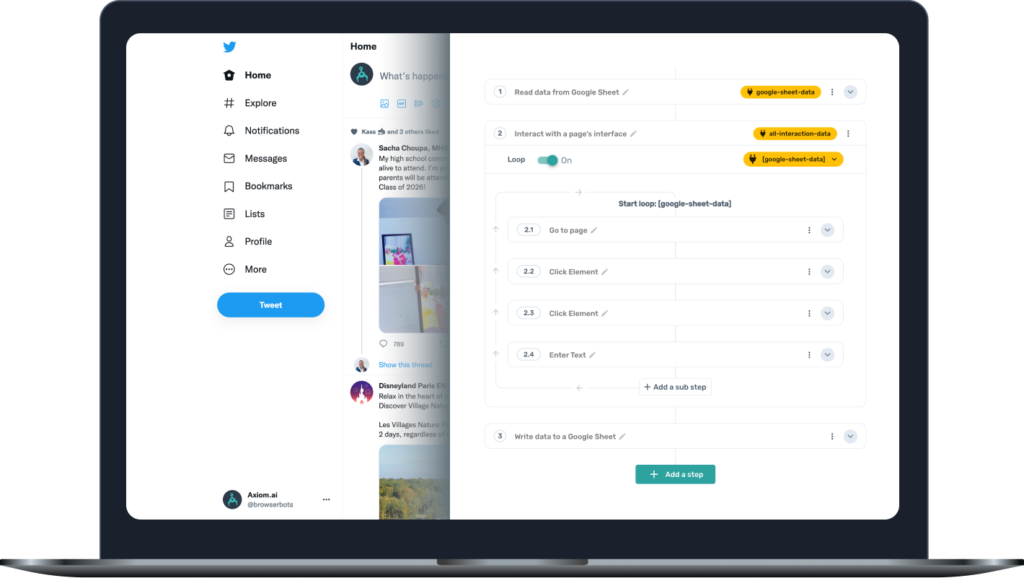
Axiom AI is an AI-driven automation and insights platform designed to help businesses streamline research, analyze data faster, and automate complex tasks.
Rather than serving as a narrow point solution (like simple task automation or visual design), axiom ai bridges the gap between AI decision support and operational workflows. It combines data exploration, AI research automation, and intelligent agent features into one environment that helps teams get answers, not just outputs.
Within the broader AI software ecosystem, axiom ai competes with workflow automation tools, business intelligence platforms, and AI research assistants. Its differentiation lies in flexibility ; the platform can adapt to a wide range of business questions without extensive configuration.
For businesses new to the tool, think of axiom ai as an “AI-assisted research and automation console” that speeds up data understanding and routine decision work.
How Axiom AI Works
Understanding how axiom ai operates helps clarify where it fits in business workflows.
Step One Connect Data and Context
Businesses connect their data sources ; spreadsheets, CRM records, analytics platforms, or internal documents. Axiom ai learns from context and historical information to provide more accurate insights.
Step Two Define Tasks or Questions
Users specify tasks such as “analyze customer churn trends,” “identify pricing anomalies,” or “generate weekly performance summaries.”
Step Three AI-Driven Analysis
The platform processes the query using AI models, rapidly exploring patterns in the underlying data.
Step Four Output Insights or Automated Actions
Axiom ai produces structured answers, visualizations, or action recommendations. It can also trigger automated workflows where needed.
Step Five Refine and Iterate
Teams can refine queries or set recurring tasks to keep insights up to date over time.
This workflow promotes a shift from manual analysis toward smart, automated intelligence generation.
Core Features Overview
Axiom ai offers a range of capabilities that support research, insights, and automation.
AI Research Assistant
Rather than waiting for analysts to generate answers, AI looks across data and produces summarized insights.
Why it matters: Accelerates decision-making time.
Workflow Automation
Users can set up automated tasks based on triggers or recurring schedules.
Why it matters: Reduces manual work and frees teams to focus on strategic goals.
Natural Language Querying
Teams can ask questions in plain English, not code or SQL.
Why it matters: Lowers the barrier to data exploration for non-technical users.
Insights Visualization
Key metrics, trends, and patterns are surfaced in easy-to-consume formats.
Why it matters: Helps stakeholders grasp business signals quickly.
Scalability
The platform adapts from small teams to enterprise-level data volumes.
Why it matters: Supports growing businesses without needing separate tools.
Each feature is designed around helping teams transform data into actionable intelligence more efficiently.
Key Benefits For Businesses
Faster Decision Making
AI accelerates research and reduces bottlenecks in analysis.
Reduced Manual Work
Automating routine tasks saves time and improves consistency.
Democratized Data Access
Business users without technical backgrounds can explore data using natural language.
Scalable Insights
As data volumes grow, axiom ai scales along with business needs.
Better Operational Efficiency
By automating both analysis and action triggers, teams can focus on strategy.
For performance-led organizations, the benefits translate into faster response cycles and better resource allocation.
Who Should Use Axiom AI
Axiom ai is suited to teams looking to automate analysis and insight workflows.
Business Analysts
Helps analysts generate faster answers and automated reports.
Operations Leaders
Supports automation of recurring business processes.
Product Managers
Teams can explore user behavior and trends without querying engineers.
Marketing and Sales Teams
Generate automated analysis on campaign performance, pipeline trends, or customer behavior.
Finance and Strategy Teams
AI insights reduce time spent preparing reports and identifying drivers of performance.
Smaller organizations with limited data activity may not fully justify advanced automation investment, but teams processing recurring insights often benefit significantly.
Use Cases And Real World Scenarios
Scenario One Customer Behavior Insights
A retail business uses axiom ai to analyze customer purchase data and generate weekly trend summaries.
Result: Faster understanding of buying patterns and better promotional planning.
Scenario Two Competitive Research Automation
A technology firm configures recurring tasks to automatically track competitor pricing and product changes.
Result: Teams spend less time researching and more time acting on insights.
Scenario Three Operational KPI Monitoring
A SaaS business sets up automated performance alerts whenever key metrics dip below thresholds.
Result: Faster issue detection and more proactive planning.
These examples show how axiom ai shifts businesses from reactive tasks to proactive intelligence.
User Experience And Interface
Axiom ai prioritizes simplicity and speed. Its interface guides users through connecting data sources, defining tasks, and receiving insights with minimal configuration.
Non-technical team members benefit from natural language question entry and visual feedback rather than dashboards filled with complex charts.
While advanced users can dive deeper into configuration or integration capabilities, the focus remains on delivering clarity and usable results quickly.
Pricing And Plans Overview
AI insight and automation platforms typically offer subscription-based pricing. Plans are often based on:
- Number of users
- Volume of data or tasks
- Advanced feature access
- Support levels
Axiom ai typically provides tiered plans suited to both small teams and growing enterprises.
When assessing cost, businesses should consider:
- Time savings from automation
- Faster decision cycle impact
- Cost avoidance versus manual analysis work
For many organizations, the ROI from automation and insights can outweigh subscription costs.
Pros And Cons
Pros
- Powerful AI research and insight automation
- Natural language querying reduces technical barriers
- Workflow automation saves manual effort
- Scales with business growth
- Visual insights help stakeholders consume results
Cons
- Requires structured data sources to get maximum value
- Dependence on quality of inputs influences outputs
- May require initial onboarding for non-technical teams
- Advanced customization can need training
For businesses focused on actionable intelligence, the benefits generally justify adoption.
Comparison With Similar Tools
Axiom ai competes with platforms that combine automation, analytics, and business intelligence, such as:
- Zapier – Focuses on workflow automation across apps.
- Tableau – Provides deep data analytics and visualization.
- Microsoft Power BI – Offers enterprise business intelligence and reporting.
While these tools provide powerful functions independently, axiom ai differentiates itself by combining automated insights with workflow action triggers ; creating a more dynamic research-to-action environment.
Choosing between platforms depends on whether a business prioritizes deep visualization, automation, or integrated intelligent insights.
Buying Considerations For Decision Makers
Before adopting axiom ai, business leaders should evaluate:
Data Readiness
Ensure teams have access to the data sources needed for meaningful insights.
Task Automation Needs
Identify processes that are repetitive and suitable for automation.
Team Skill Levels
Determine who will use the tool and how familiar they are with data platforms.
ROI Analysis
Compare expected time savings and decision-making improvements against subscription costs.
Integration Complexity
Assess how the platform connects with existing technologies.
A structured evaluation ensures strategic alignment with business goals.
Security Privacy And Compliance
Business data is often sensitive, especially in finance, healthcare, or consumer data domains.
Axiom ai provides secure data connections and access controls. Organizations should review documentation around data encryption, retention policies, and compliance with regional privacy standards.
Ensuring robust security practices protects both internal insights and customer trust.
Support And Documentation
Strong onboarding resources enhance adoption success.
Axiom ai offers documentation, tutorials, and support materials to help teams connect data and configure tasks. The availability of responsive customer support improves implementation speed and troubleshooting.
Organizations should confirm support levels included in their plan before purchasing.
Final Verdict
This axiom ai review shows that the platform is designed to help businesses extract insights and automate workflow tasks quickly and efficiently.
Its strengths lie in natural language insights, workflow automation, and the ability to scale with business needs. Teams that invest in structuring their data and automation goals tend to see faster time -to -action and reduced manual effort.
Axiom ai is best suited for data-driven teams, operations leaders, and business analysts with recurring insight and workflow demands.
For organizations seeking to unlock intelligence from data and streamline operational processes, axiom ai represents a practical and flexible automation solution.
Frequently Asked Questions
Is Axiom AI Suitable For Small Businesses
Yes, particularly if small teams have recurring insight needs and goals for automation.
Does Axiom AI Require Technical Expertise
Basic use is simple, but advanced automation setups may benefit from technical support.
Can Axiom AI Integrate With Existing Data Tools
Yes, the platform typically connects with common data sources and analytics systems.
Is Axiom AI Scalable For Growth
Yes ; it supports expanding tasks and data volumes as businesses grow.
Does Axiom AI Support Automated Actions
Yes. The platform not only provides insights but can trigger automated workflows based on conditions or schedules.