
Abridge AI Review What Healthcare Providers Should Know

Healthcare providers across the United States, United Kingdom, Canada, and Australia are actively searching for solutions that reduce documentation burden without compromising accuracy or compliance.
This is where abridge ai enters the discussion.
In this abridge ai review, we examine how the platform uses artificial intelligence to transform patient clinician conversations into structured clinical notes. The goal is simple. Reduce administrative load while improving documentation quality and workflow efficiency.
The problem it addresses is clear. Manual documentation is time consuming, error prone, and often performed after hours. Abridge ai is designed for physicians, medical groups, hospitals, and health systems seeking to modernize clinical documentation through automation.
Its primary use case is converting real time patient encounters into usable medical notes that can integrate into existing electronic health record systems.
What Is Abridge AI
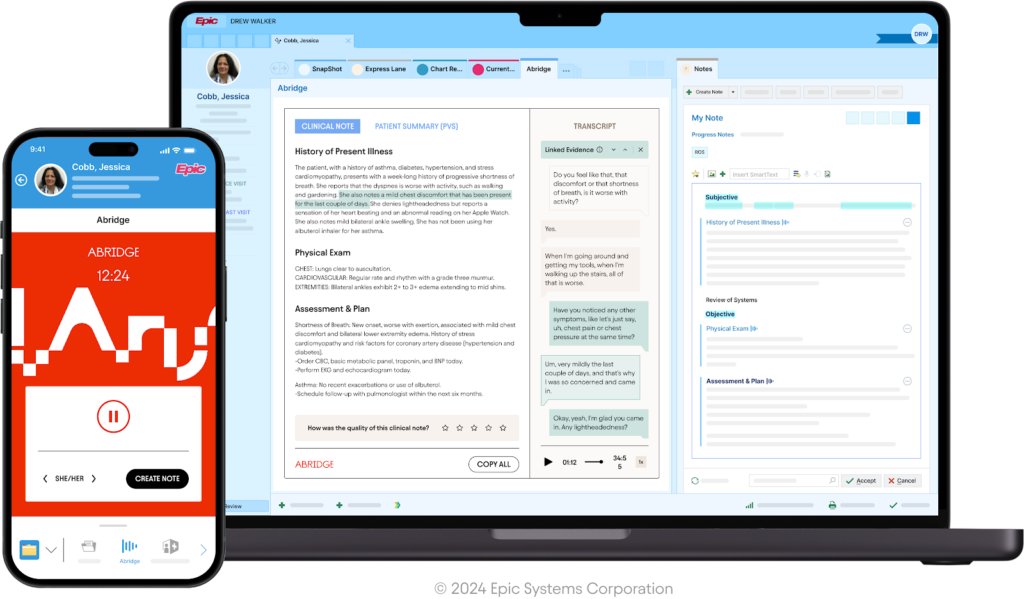
Abridge is a healthcare focused AI company that develops tools to document clinical conversations automatically. Abridge ai listens to patient clinician interactions and generates structured summaries aligned with medical documentation standards.
The platform positions itself within the healthcare AI and clinical documentation segment of the SaaS market. It operates at the intersection of speech recognition, natural language processing, and electronic health record integration.
Unlike generic transcription tools, abridge ai is purpose built for medical contexts. It recognizes clinical terminology, identifies relevant diagnoses and treatment plans, and organizes notes in a format usable by healthcare providers.
Within the broader digital health ecosystem, abridge ai contributes to the shift toward intelligent clinical workflows and AI assisted care delivery.
How Abridge AI Works
Understanding how abridge ai works helps healthcare leaders assess operational fit.
Step One Capture The Clinical Conversation
During a patient visit, the conversation is securely recorded through an approved device or integrated system. Patient consent and privacy protocols are critical components of this process.
Step Two AI Transcription And Analysis
The system transcribes the conversation and applies natural language processing to identify medically relevant information. It distinguishes between casual dialogue and clinically significant content.
Step Three Structured Note Generation
Abridge ai converts the analyzed data into structured clinical notes. These notes can align with common documentation formats used in electronic health records.
Step Four Review And Edit
Clinicians review the generated notes, make adjustments if necessary, and approve them before final submission to the patient record.
Step Five Integration With EHR Systems
The finalized documentation integrates into existing electronic health record workflows, reducing duplicate entry.
The daily workflow becomes more streamlined. Instead of typing throughout or after appointments, clinicians focus on patient interaction while AI assists with documentation.
Core Features Overview
Abridge ai delivers targeted capabilities designed for healthcare environments.
Medical Grade Speech Recognition
The platform is optimized for medical terminology, including diagnoses, medications, and procedures.
Why it matters: Generic transcription tools may misinterpret complex clinical language. Accuracy is essential for patient safety.
Structured Clinical Summaries
Rather than providing raw transcripts, abridge ai generates organized summaries that match clinical documentation standards.
Why it matters: Structured notes reduce the need for manual reformatting and improve record consistency.
Electronic Health Record Integration
The platform integrates with EHR systems to support seamless workflow adoption.
Why it matters: Integration reduces friction and avoids duplicating work.
Compliance And Security Controls
Healthcare data requires strict privacy safeguards. Abridge ai emphasizes secure data handling and compliance alignment.
Why it matters: Regulatory adherence is mandatory for healthcare providers.
Each feature addresses a practical documentation challenge faced by clinicians and administrators.
Key Benefits For Users
Healthcare decision makers evaluate tools based on patient care impact and operational efficiency.
Reduced Documentation Burden
Clinicians spend less time typing and more time focusing on patients.
Improved Patient Engagement
When providers are not distracted by screens, patient interaction quality often improves.
Enhanced Documentation Consistency
AI generated structured notes can reduce variability in documentation style.
Lower Risk Of Burnout
Reducing after hours charting contributes to improved work life balance for clinicians.
Scalable Across Health Systems
Large medical groups can deploy abridge ai across departments, supporting consistent workflows.
The benefits extend beyond efficiency. They influence clinician satisfaction and patient experience.
Who Should Use This Software
Abridge ai is best suited for healthcare providers operating in structured clinical environments.
Physicians And Specialists
Primary care physicians and specialists who manage high patient volumes benefit significantly from documentation automation.
Hospital Systems
Large hospital networks seeking to standardize documentation practices can implement abridge ai at scale.
Outpatient Clinics
Clinics with limited administrative resources gain efficiency through AI supported note generation.
Academic Medical Centers
Teaching hospitals can use the tool to support trainees while maintaining documentation quality.
Smaller practices may also benefit, but enterprise level healthcare organizations often see the most measurable impact.
Use Cases And Real World Scenarios
Practical examples illustrate the value of abridge ai.
Scenario One Primary Care Visit
A physician conducts a routine consultation. The system captures the discussion, extracts symptoms, diagnoses, and treatment plans, and generates a structured note. The physician reviews and approves it within minutes.
Result: Reduced charting time and improved patient focus.
Scenario Two Specialist Consultation
A cardiologist discusses complex treatment options. Abridge ai identifies key medical terms and summarizes the encounter clearly for the patient record.
Result: Accurate documentation without extended after hours work.
Scenario Three Multisite Health System
A hospital network deploys abridge ai across multiple clinics. Standardized documentation improves reporting and quality assurance processes.
Result: Operational consistency and enhanced administrative efficiency.
These scenarios demonstrate real workflow improvements rather than theoretical benefits.
User Experience And Interface
Healthcare software must prioritize clarity and usability.
Abridge ai provides a clean interface that allows clinicians to review and edit notes efficiently. Generated summaries are organized logically, making it easy to verify accuracy.
The learning curve is relatively low for clinicians familiar with digital documentation systems. Initial onboarding and training help ensure correct usage and compliance.
Design quality emphasizes functionality over visual complexity. This aligns with healthcare professionals who prioritize speed and reliability.
Accessibility considerations, including readable formatting and intuitive navigation, support diverse clinical teams.
Pricing And Plans Overview
Healthcare AI solutions often use customized pricing models based on provider count, visit volume, and integration requirements.
Abridge ai typically structures pricing around organizational size and usage. Health systems may negotiate enterprise agreements, while smaller clinics may opt for tiered plans.
Decision makers should evaluate cost relative to potential time savings and productivity gains. Reduced overtime documentation and improved clinician retention can contribute to financial justification.
A pilot program may help organizations assess real world value before full scale rollout.
Pros And Cons
A balanced abridge ai review includes both advantages and potential limitations.
Pros
Purpose built for medical documentation
Structured clinical summaries rather than raw transcripts
Supports EHR integration
Reduces clinician documentation burden
Scalable for health systems
Cons
Requires strong privacy and consent protocols
Dependent on audio clarity and recording quality
May require workflow adjustments during initial adoption
For healthcare organizations prepared to implement structured onboarding, the benefits often outweigh the challenges.
Comparison With Similar Tools
Abridge ai operates within a competitive healthcare AI landscape that includes solutions such as Nuance Communications and Suki AI.
Nuance offers established clinical speech recognition solutions integrated into many hospital systems. It has long standing enterprise adoption.
Suki AI focuses on voice driven documentation assistance with emphasis on clinician usability.
Abridge ai differentiates itself through structured conversation summaries and patient friendly outputs alongside clinician documentation support.
Healthcare leaders should evaluate integration compatibility, accuracy performance, and workflow alignment when comparing solutions.
Buying Considerations For Decision Makers
Before adopting abridge ai, healthcare organizations should assess several factors.
Data Privacy And Regulatory Compliance
Ensure the platform aligns with regional healthcare data regulations and internal compliance standards.
Integration With Existing EHR Systems
Compatibility with current electronic health record platforms is essential for smooth deployment.
Clinician Training And Adoption
Successful implementation depends on clinician buy in and structured onboarding programs.
Return On Investment
Calculate potential reductions in documentation time, overtime costs, and burnout related turnover.
Reviewing SaaS case studies from similar healthcare organizations can help demonstrate measurable improvements in efficiency and satisfaction.
Security Privacy And Compliance
Healthcare data protection is paramount.
Abridge ai emphasizes secure data handling, encryption, and access controls. Organizations should review detailed compliance documentation to ensure alignment with applicable healthcare regulations.
Clear consent processes for recording patient conversations are essential. Transparency builds trust with both patients and clinicians.
Security and privacy alignment are critical factors for enterprise healthcare buyers evaluating AI solutions.
Support And Documentation
Healthcare organizations require dependable support during deployment and ongoing usage.
Abridge ai provides onboarding assistance, documentation, and customer support resources. Enterprises should clarify response times and available service agreements.
Comprehensive help materials reduce adoption friction and support consistent usage across departments.
Reliable post implementation support ensures long term confidence in the platform.
Final Verdict
This abridge ai review highlights a focused and clinically aligned solution to one of healthcare’s most persistent challenges. Documentation burden.
By transforming patient clinician conversations into structured clinical notes, abridge ai reduces administrative workload while supporting accuracy and compliance.
It is best suited for physicians, hospital systems, and healthcare organizations seeking scalable documentation efficiency without sacrificing patient care quality.
Smaller practices may benefit, but the most significant impact is often seen in structured clinical environments with high patient volumes.
For healthcare providers in Tier One markets aiming to modernize workflows and reduce burnout, abridge ai represents a strategic and forward looking investment.
Frequently Asked Questions
Is Abridge AI Designed Specifically For Healthcare
Yes. It is purpose built for clinical documentation and medical terminology.
Does Abridge AI Replace Electronic Health Records
No. It integrates with existing EHR systems to support documentation workflows.
Is Patient Consent Required
Yes. Proper consent and privacy compliance procedures are essential when recording clinical conversations.
Can Abridge AI Scale Across Large Health Systems
Yes. The platform is designed to support enterprise level healthcare deployments.
Does Abridge AI Reduce After Hours Charting
Many organizations report reduced documentation time, which can help decrease after hours charting and clinician burnout.
Clinical documentation is one of the biggest sources of burnout in modern healthcare. Physicians and care teams spend hours entering notes into electronic health records. This reduces time with patients and increases administrative pressure.
Healthcare providers across the United States, United Kingdom, Canada, and Australia are actively searching for solutions that reduce documentation burden without compromising accuracy or compliance.
This is where abridge ai enters the discussion.
In this abridge ai review, we examine how the platform uses artificial intelligence to transform patient clinician conversations into structured clinical notes. The goal is simple. Reduce administrative load while improving documentation quality and workflow efficiency.
The problem it addresses is clear. Manual documentation is time consuming, error prone, and often performed after hours. Abridge ai is designed for physicians, medical groups, hospitals, and health systems seeking to modernize clinical documentation through automation.
Its primary use case is converting real time patient encounters into usable medical notes that can integrate into existing electronic health record systems.
What Is Abridge AI
Abridge is a healthcare focused AI company that develops tools to document clinical conversations automatically. Abridge ai listens to patient clinician interactions and generates structured summaries aligned with medical documentation standards.
The platform positions itself within the healthcare AI and clinical documentation segment of the SaaS market. It operates at the intersection of speech recognition, natural language processing, and electronic health record integration.
Unlike generic transcription tools, abridge ai is purpose built for medical contexts. It recognizes clinical terminology, identifies relevant diagnoses and treatment plans, and organizes notes in a format usable by healthcare providers.
Within the broader digital health ecosystem, abridge ai contributes to the shift toward intelligent clinical workflows and AI assisted care delivery.
How Abridge AI Works
Understanding how abridge ai works helps healthcare leaders assess operational fit.
Step One Capture The Clinical Conversation
During a patient visit, the conversation is securely recorded through an approved device or integrated system. Patient consent and privacy protocols are critical components of this process.
Step Two AI Transcription And Analysis
The system transcribes the conversation and applies natural language processing to identify medically relevant information. It distinguishes between casual dialogue and clinically significant content.
Step Three Structured Note Generation
Abridge ai converts the analyzed data into structured clinical notes. These notes can align with common documentation formats used in electronic health records.
Step Four Review And Edit
Clinicians review the generated notes, make adjustments if necessary, and approve them before final submission to the patient record.
Step Five Integration With EHR Systems
The finalized documentation integrates into existing electronic health record workflows, reducing duplicate entry.
The daily workflow becomes more streamlined. Instead of typing throughout or after appointments, clinicians focus on patient interaction while AI assists with documentation.
Core Features Overview
Abridge ai delivers targeted capabilities designed for healthcare environments.
Medical Grade Speech Recognition
The platform is optimized for medical terminology, including diagnoses, medications, and procedures.
Why it matters: Generic transcription tools may misinterpret complex clinical language. Accuracy is essential for patient safety.
Structured Clinical Summaries
Rather than providing raw transcripts, abridge ai generates organized summaries that match clinical documentation standards.
Why it matters: Structured notes reduce the need for manual reformatting and improve record consistency.
Electronic Health Record Integration
The platform integrates with EHR systems to support seamless workflow adoption.
Why it matters: Integration reduces friction and avoids duplicating work.
Compliance And Security Controls
Healthcare data requires strict privacy safeguards. Abridge ai emphasizes secure data handling and compliance alignment.
Why it matters: Regulatory adherence is mandatory for healthcare providers.
Each feature addresses a practical documentation challenge faced by clinicians and administrators.
Key Benefits For Users
Healthcare decision makers evaluate tools based on patient care impact and operational efficiency.
Reduced Documentation Burden
Clinicians spend less time typing and more time focusing on patients.
Improved Patient Engagement
When providers are not distracted by screens, patient interaction quality often improves.
Enhanced Documentation Consistency
AI generated structured notes can reduce variability in documentation style.
Lower Risk Of Burnout
Reducing after hours charting contributes to improved work life balance for clinicians.
Scalable Across Health Systems
Large medical groups can deploy abridge ai across departments, supporting consistent workflows.
The benefits extend beyond efficiency. They influence clinician satisfaction and patient experience.
Who Should Use This Software
Abridge ai is best suited for healthcare providers operating in structured clinical environments.
Physicians And Specialists
Primary care physicians and specialists who manage high patient volumes benefit significantly from documentation automation.
Hospital Systems
Large hospital networks seeking to standardize documentation practices can implement abridge ai at scale.
Outpatient Clinics
Clinics with limited administrative resources gain efficiency through AI supported note generation.
Academic Medical Centers
Teaching hospitals can use the tool to support trainees while maintaining documentation quality.
Smaller practices may also benefit, but enterprise level healthcare organizations often see the most measurable impact.
Use Cases And Real World Scenarios
Practical examples illustrate the value of abridge ai.
Scenario One Primary Care Visit
A physician conducts a routine consultation. The system captures the discussion, extracts symptoms, diagnoses, and treatment plans, and generates a structured note. The physician reviews and approves it within minutes.
Result: Reduced charting time and improved patient focus.
Scenario Two Specialist Consultation
A cardiologist discusses complex treatment options. Abridge ai identifies key medical terms and summarizes the encounter clearly for the patient record.
Result: Accurate documentation without extended after hours work.
Scenario Three Multisite Health System
A hospital network deploys abridge ai across multiple clinics. Standardized documentation improves reporting and quality assurance processes.
Result: Operational consistency and enhanced administrative efficiency.
These scenarios demonstrate real workflow improvements rather than theoretical benefits.
User Experience And Interface
Healthcare software must prioritize clarity and usability.
Abridge ai provides a clean interface that allows clinicians to review and edit notes efficiently. Generated summaries are organized logically, making it easy to verify accuracy.
The learning curve is relatively low for clinicians familiar with digital documentation systems. Initial onboarding and training help ensure correct usage and compliance.
Design quality emphasizes functionality over visual complexity. This aligns with healthcare professionals who prioritize speed and reliability.
Accessibility considerations, including readable formatting and intuitive navigation, support diverse clinical teams.
Pricing And Plans Overview
Healthcare AI solutions often use customized pricing models based on provider count, visit volume, and integration requirements.
Abridge ai typically structures pricing around organizational size and usage. Health systems may negotiate enterprise agreements, while smaller clinics may opt for tiered plans.
Decision makers should evaluate cost relative to potential time savings and productivity gains. Reduced overtime documentation and improved clinician retention can contribute to financial justification.
A pilot program may help organizations assess real world value before full scale rollout.
Pros And Cons
A balanced abridge ai review includes both advantages and potential limitations.
Pros
Purpose built for medical documentation
Structured clinical summaries rather than raw transcripts
Supports EHR integration
Reduces clinician documentation burden
Scalable for health systems
Cons
Requires strong privacy and consent protocols
Dependent on audio clarity and recording quality
May require workflow adjustments during initial adoption
For healthcare organizations prepared to implement structured onboarding, the benefits often outweigh the challenges.
Comparison With Similar Tools
Abridge ai operates within a competitive healthcare AI landscape that includes solutions such as Nuance Communications and Suki AI.
Nuance offers established clinical speech recognition solutions integrated into many hospital systems. It has long standing enterprise adoption.
Suki AI focuses on voice driven documentation assistance with emphasis on clinician usability.
Abridge ai differentiates itself through structured conversation summaries and patient friendly outputs alongside clinician documentation support.
Healthcare leaders should evaluate integration compatibility, accuracy performance, and workflow alignment when comparing solutions.
Buying Considerations For Decision Makers
Before adopting abridge ai, healthcare organizations should assess several factors.
Data Privacy And Regulatory Compliance
Ensure the platform aligns with regional healthcare data regulations and internal compliance standards.
Integration With Existing EHR Systems
Compatibility with current electronic health record platforms is essential for smooth deployment.
Clinician Training And Adoption
Successful implementation depends on clinician buy in and structured onboarding programs.
Return On Investment
Calculate potential reductions in documentation time, overtime costs, and burnout related turnover.
Reviewing SaaS case studies from similar healthcare organizations can help demonstrate measurable improvements in efficiency and satisfaction.
Security Privacy And Compliance
Healthcare data protection is paramount.
Abridge ai emphasizes secure data handling, encryption, and access controls. Organizations should review detailed compliance documentation to ensure alignment with applicable healthcare regulations.
Clear consent processes for recording patient conversations are essential. Transparency builds trust with both patients and clinicians.
Security and privacy alignment are critical factors for enterprise healthcare buyers evaluating AI solutions.
Support And Documentation
Healthcare organizations require dependable support during deployment and ongoing usage.
Abridge ai provides onboarding assistance, documentation, and customer support resources. Enterprises should clarify response times and available service agreements.
Comprehensive help materials reduce adoption friction and support consistent usage across departments.
Reliable post implementation support ensures long term confidence in the platform.
Final Verdict
This abridge ai review highlights a focused and clinically aligned solution to one of healthcare’s most persistent challenges. Documentation burden.
By transforming patient clinician conversations into structured clinical notes, abridge ai reduces administrative workload while supporting accuracy and compliance.
It is best suited for physicians, hospital systems, and healthcare organizations seeking scalable documentation efficiency without sacrificing patient care quality.
Smaller practices may benefit, but the most significant impact is often seen in structured clinical environments with high patient volumes.
For healthcare providers in Tier One markets aiming to modernize workflows and reduce burnout, abridge ai represents a strategic and forward looking investment.
Frequently Asked Questions
Is Abridge AI Designed Specifically For Healthcare
Yes. It is purpose built for clinical documentation and medical terminology.
Does Abridge AI Replace Electronic Health Records
No. It integrates with existing EHR systems to support documentation workflows.
Is Patient Consent Required
Yes. Proper consent and privacy compliance procedures are essential when recording clinical conversations.
Can Abridge AI Scale Across Large Health Systems
Yes. The platform is designed to support enterprise level healthcare deployments.
Does Abridge AI Reduce After Hours Charting
Many organizations report reduced documentation time, which can help decrease after hours charting and clinician burnout.