Artisan AI Review What Businesses Should Know Before Getting Started

Artificial intelligence is no longer experimental. Businesses across the United States, United Kingdom, Canada, and Australia are actively investing in AI powered automation to improve productivity, reduce operational costs, and enhance customer engagement.
Yet one major challenge remains. Most organizations struggle with hiring, onboarding, and scaling digital talent quickly enough to keep pace with growth.
That is where artisan ai enters the conversation.
In this artisan ai review, we explore how the platform helps businesses automate key sales and go to market workflows using AI powered digital workers. Instead of adding more headcount, companies can deploy AI teammates designed to handle outbound prospecting, research, and engagement at scale.
The core problem is simple. Growing businesses need consistent pipeline generation without ballooning operational costs. Artisan ai aims to solve this by combining automation, personalization, and AI driven outreach into one unified platform.
Artisan ai is designed for revenue teams, founders, sales leaders, and growth focused organizations that want scalable outbound systems. Its primary use cases include cold outreach automation, lead research, email personalization, and sales workflow optimization.
The mission is clear. Turn AI into a revenue generating asset.
What Is Artisan AI
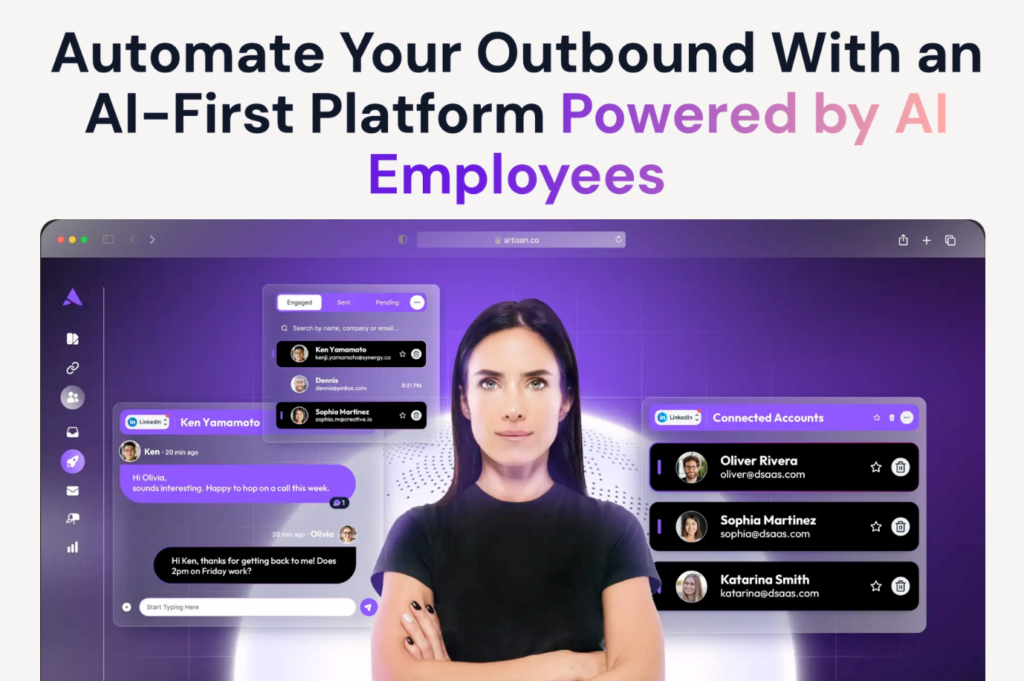
Artisan AI is an AI powered sales automation platform that enables businesses to deploy autonomous AI “employees” focused on outbound prospecting and lead generation.
Rather than functioning as a basic email automation tool, artisan ai positions itself as a digital workforce platform. Its AI agents can research prospects, craft personalized outreach, and execute campaigns across channels.
Within the broader SaaS and AI ecosystem, artisan ai competes in the sales engagement and automation space. However, it differentiates itself by emphasizing autonomous execution rather than simple workflow triggers.
For readers new to the platform, think of artisan ai as a virtual SDR (Sales Development Representative) that operates continuously, learning from data and optimizing outreach over time.
How Artisan AI Works
Understanding how artisan ai operates is essential for evaluating its strategic fit.
Step One Data Integration
Businesses connect CRM systems, prospect databases, and enrichment tools. This allows artisan ai to access relevant contact and company level data for campaign execution.
Step Two AI Agent Configuration
Users configure AI agents based on target audience, messaging goals, and campaign objectives. This includes defining ICP (Ideal Customer Profile), tone of voice, and engagement strategy.
Step Three Prospect Research And Personalization
The AI analyzes public data, company insights, and available signals to generate personalized outreach messages. Unlike generic templates, messages adapt to each prospect.
Step Four Automated Outreach Execution
Artisan ai sends emails or sequences at scale while maintaining personalization quality. It manages timing, follow ups, and response handling workflows.
Step Five Performance Monitoring And Optimization
Dashboards provide campaign analytics such as open rates, reply rates, and conversion metrics. The system refines messaging based on performance signals.
The workflow reduces manual sales effort while maintaining strategic oversight from human teams.
Core Features Overview
Artisan ai focuses on automation, personalization, and scalable outbound systems.
AI Powered Sales Agents
Digital agents simulate the work of SDRs. They handle research, messaging, and outreach execution.
Why it matters: Reduces hiring pressure and increases outreach capacity without linear cost growth.
Intelligent Personalization Engine
The platform crafts customized emails based on prospect attributes and contextual data.
Why it matters: Personalization improves response rates compared to generic automation tools.
Multi Step Campaign Automation
Businesses can design structured sequences including initial outreach and follow ups.
Why it matters: Consistency increases pipeline generation efficiency.
Analytics And Reporting
Real time dashboards track campaign metrics and engagement patterns.
Why it matters: Data driven refinement improves ROI over time.
CRM Integration
Artisan ai integrates with popular CRM systems to sync lead status and engagement history.
Why it matters: Prevents data silos and maintains visibility across revenue teams.
Each feature supports one objective. Scalable and predictable outbound growth.
Key Benefits For Businesses
Reduced Sales Hiring Costs
Instead of expanding SDR teams rapidly, businesses can deploy artisan ai to supplement human sales capacity.
Faster Pipeline Generation
AI agents operate continuously, accelerating prospect outreach volume.
Improved Outreach Consistency
Automation ensures campaigns run without interruption or manual oversight gaps.
Scalable Growth Infrastructure
As target markets expand, artisan ai scales outreach operations accordingly.
Enhanced Data Driven Decisions
Campaign analytics enable sales leaders to adjust strategy based on measurable insights.
For growth stage companies, this translates to operational leverage and improved efficiency.
Who Should Use Artisan AI
Artisan ai is best suited for organizations with structured outbound sales models.
B2B SaaS Companies
Companies selling software solutions can use artisan ai to generate consistent demo bookings.
Growth Stage Startups
Founders needing pipeline without hiring full SDR teams may benefit significantly.
Revenue Operations Leaders
RevOps professionals seeking automation and efficiency improvements can centralize workflows.
Agencies And Service Providers
Marketing and lead generation agencies can scale outreach for multiple clients.
Businesses without outbound strategies or defined target audiences may not fully benefit from the platform’s capabilities.
Use Cases And Real World Scenarios
Scenario One Scaling Cold Outreach
A SaaS company targeting mid market enterprises configures artisan ai to identify decision makers and execute personalized email campaigns.
Result: Increased meeting bookings without increasing headcount.
Scenario Two Market Expansion
A company entering a new geographic region deploys AI agents to research and contact local prospects.
Result: Faster market penetration and pipeline visibility.
Scenario Three Agency Client Automation
A B2B marketing agency uses artisan ai to manage outbound campaigns for multiple clients simultaneously.
Result: Higher productivity per account manager and improved client retention.
These examples illustrate artisan ai as a revenue enablement tool rather than a generic automation product.
User Experience And Interface
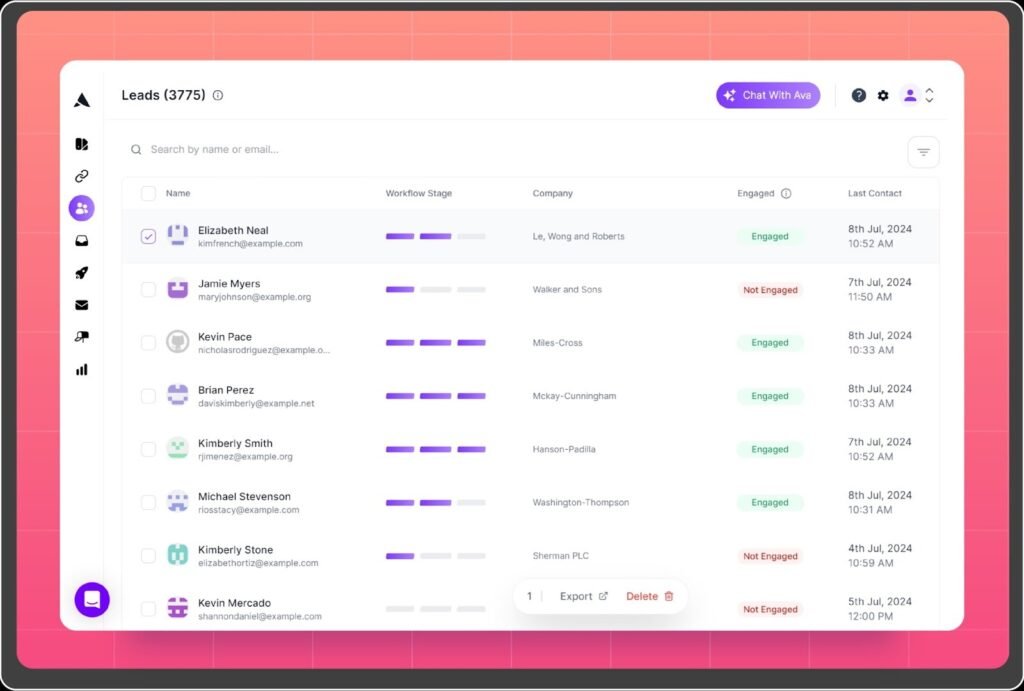
Artisan ai offers a structured dashboard designed for sales professionals rather than data scientists. Navigation is streamlined around campaigns, agents, and analytics.
The learning curve is moderate. Sales teams familiar with CRM platforms adapt quickly. Founders and non technical operators may require onboarding to fully leverage advanced personalization features.
Design emphasizes clarity over aesthetic complexity. Performance metrics are displayed prominently to support rapid decision making.
Pricing And Plans Overview
Enterprise grade sales automation platforms typically operate on subscription based pricing models influenced by outreach volume, number of AI agents, and integration needs.
Artisan ai offers tiered plans designed to align with company size and campaign scale. Businesses should evaluate:
- Monthly outreach volume requirements
- CRM integration needs
- Advanced personalization features
- Support and onboarding packages
When assessing cost, leaders should compare pricing against SDR salaries, training costs, and management overhead.
In many cases, artisan ai can provide a more predictable and scalable alternative to rapid hiring.
Pros And Cons
Pros
AI driven autonomous outreach
High level personalization capabilities
Scalable outbound infrastructure
Reduced manual workload for sales teams
Strong analytics for optimization
Cons
Requires clear ICP definition for best results
May need oversight to ensure brand alignment
Pricing may exceed simple email automation tools
Not ideal for businesses without outbound focus
For structured outbound teams, strengths generally outweigh limitations.
Comparison With Similar Tools
Artisan ai competes with platforms like:
- Apollo.io – Known for prospect data and outreach automation.
- Outreach – Enterprise sales engagement and sequence management.
- Salesloft – Sales communication and cadence automation.
While these platforms provide automation and engagement tools, artisan ai differentiates itself through autonomous AI agents that handle research and execution with minimal manual intervention.
The decision ultimately depends on whether a business prefers human led automation workflows or AI led execution systems.
Buying Considerations For Decision Makers
Before adopting artisan ai, evaluate the following:
Defined Target Audience
Clear ICP and segmentation improve AI effectiveness.
CRM And Tech Stack Compatibility
Ensure integration with existing revenue systems.
Brand Voice Alignment
Establish messaging guidelines to maintain consistency.
Compliance And Deliverability
Review email deliverability safeguards and regulatory considerations.
ROI Projection
Estimate meeting booking improvements versus SDR cost savings.
Structured evaluation ensures responsible adoption.
Security Privacy And Compliance
Businesses must ensure outreach compliance with regional regulations such as CAN SPAM and GDPR requirements.
Artisan ai provides account level controls and monitoring systems to support responsible automation. Organizations should confirm data handling practices align with internal policies.
Security transparency strengthens executive confidence.
Support And Documentation
Reliable support accelerates implementation.
Artisan ai provides onboarding resources, documentation, and customer support channels. Businesses should clarify service levels, onboarding assistance, and response time expectations before commitment.
Effective support ensures AI adoption translates into measurable outcomes.
Final Verdict
This artisan ai review highlights a platform designed for growth focused businesses seeking scalable outbound systems.
Its strength lies in autonomous AI execution, personalization depth, and revenue workflow automation. Rather than functioning as a simple email tool, artisan ai acts as a digital sales workforce extension.
It is best suited for B2B companies, SaaS providers, and agencies with defined outbound strategies and measurable growth targets.
Businesses without structured sales processes may need to build foundational strategy before adopting the platform.
For organizations in competitive Tier One markets prioritizing efficiency and predictable pipeline growth, artisan ai represents a forward thinking investment.
Frequently Asked Questions
Is Artisan AI Suitable For Small Businesses
Yes, if they rely on outbound sales and need scalable automation. However, businesses without defined sales processes may not fully leverage its capabilities.
Does Artisan AI Replace Human Sales Teams
It supplements rather than replaces human teams. AI handles research and outreach while humans manage conversations and closing.
Can Artisan AI Integrate With CRMs
Yes. It integrates with common CRM systems to sync data and campaign results.
Is Artisan AI Scalable For Long Term Growth
Yes. The platform is built to scale outreach operations as companies expand into new markets.
Does Artisan AI Support Personalization
Yes. Personalization is a core strength of artisan ai, allowing tailored outreach based on prospect level insights.